










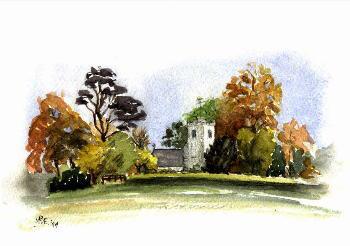
Welcome to
Beercrocombe

The Chard Canal opened in 1842. It was the last of the main English canals and technically one of the most advanced. Yet it never paid its way and was closed within 25 years of its opening. Today it lies forgotten and abandoned, but its remains are still an impressive monument to the past, and its story still has lessons for the present.
Reproduced by kind permission of the Chard History Group. There you can get an updated version of this booklet.
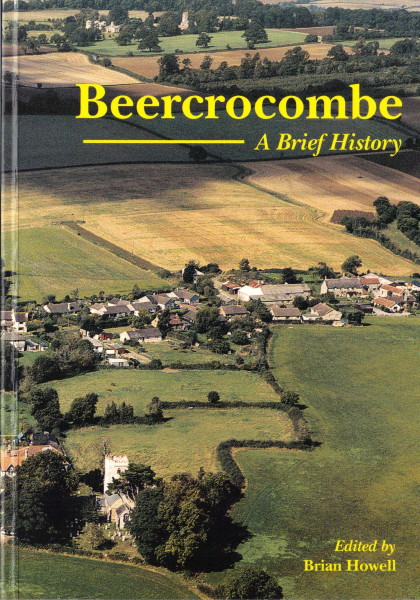
Even a small village like Beercrocombe has a long and complex history. Everyone who has lived here, even if only for a very short time, has left their mark however small. For most, history does not record their lives. For others we are left with tantalising glimpses. This little book does not attempt to provide a complete history of Beercrocombe, merely a brief look at a hamlet where our predecessors have lived for over one thousand years of good times and bad.
Beercrocombe Village Green
Village Green Registration - 1970
Village Green Plan - 1970
Village Green Commons Commissioner - 1977
Village Green Transfer from SSDC to Beercrocombe Parish Council
Village Green Land Registry registration WS83817
Village Green Plan - 1970
Village Green Commons Commissioner - 1977
Village Green Transfer from SSDC to Beercrocombe Parish Council
Village Green Land Registry registration WS83817
 |
 |
 |
 |
 |
 |
 |
 |
 |
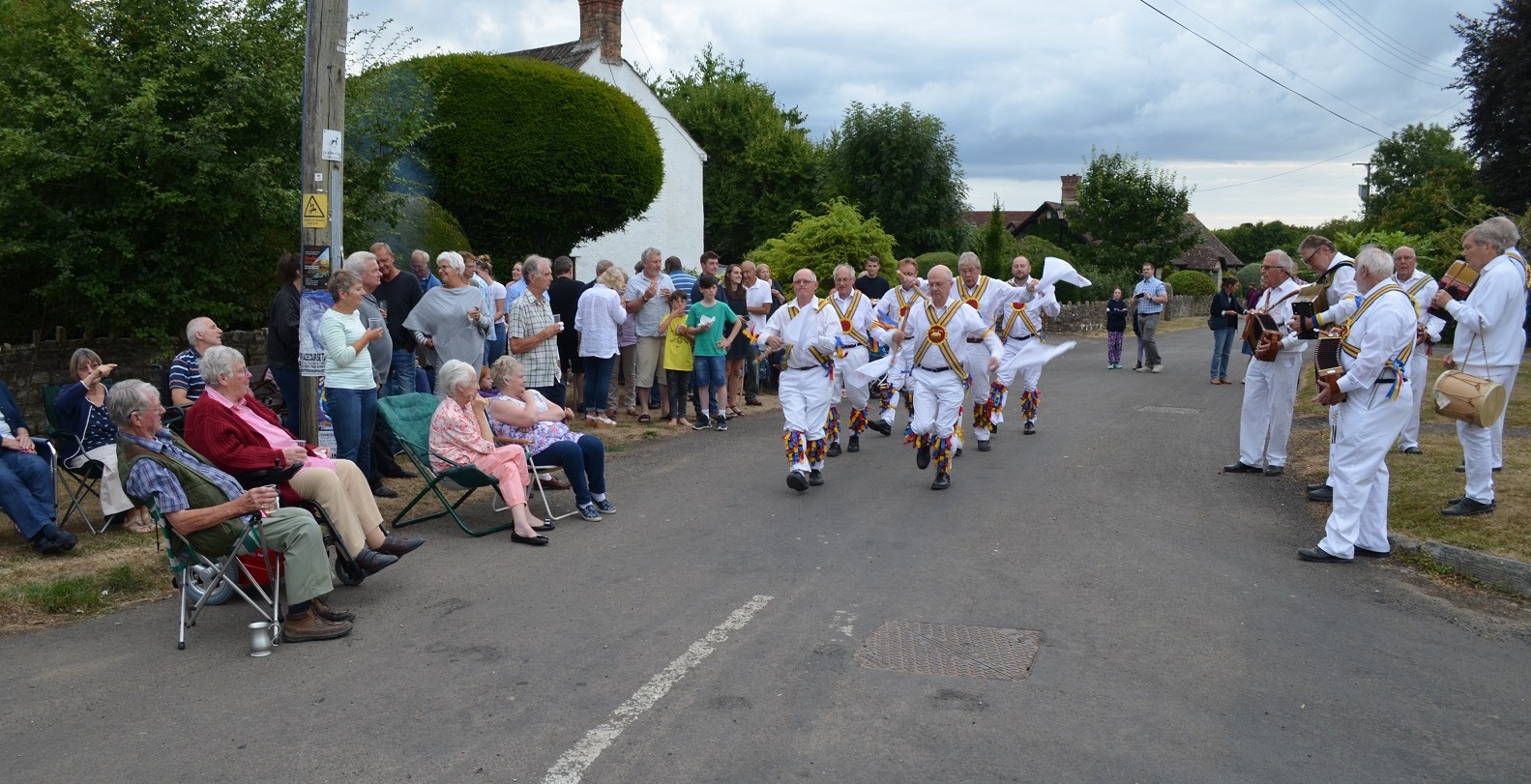 |
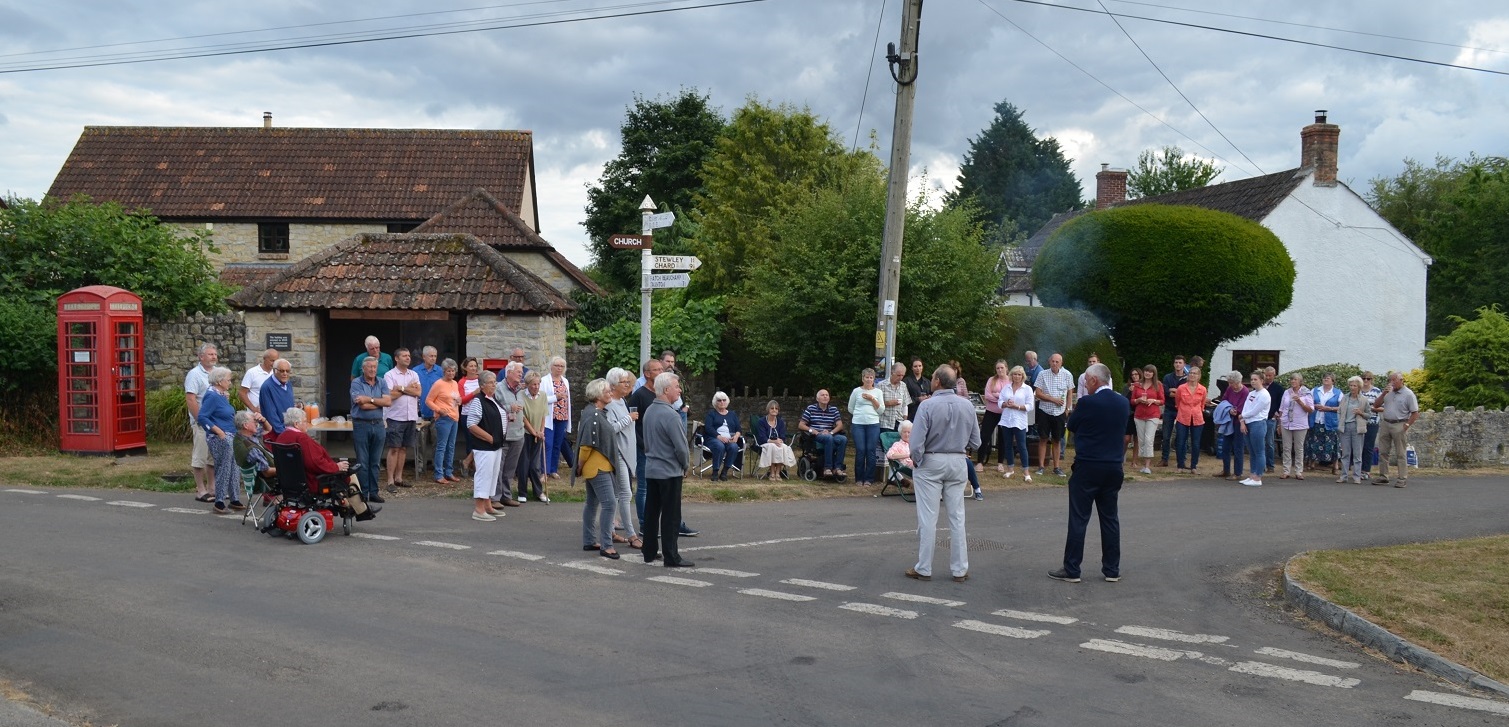
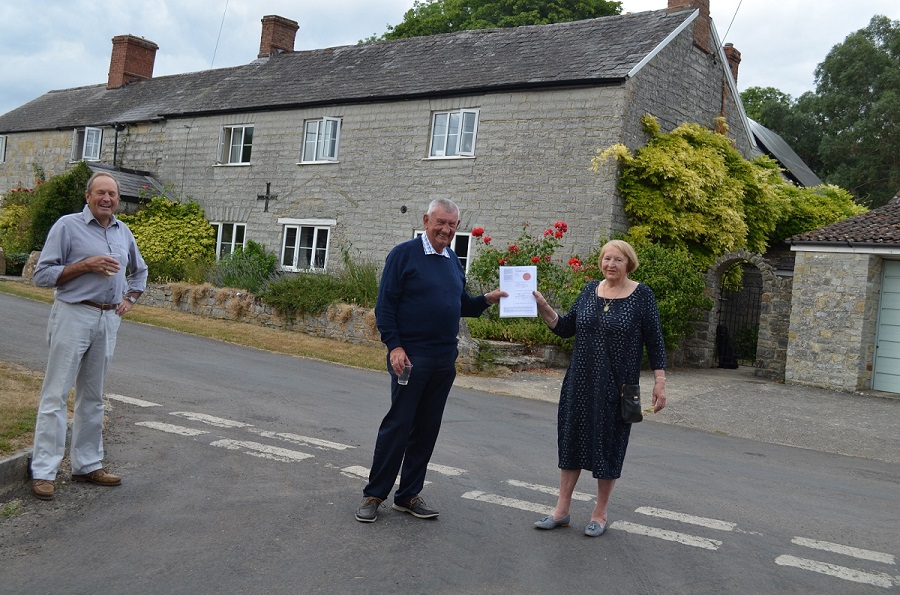
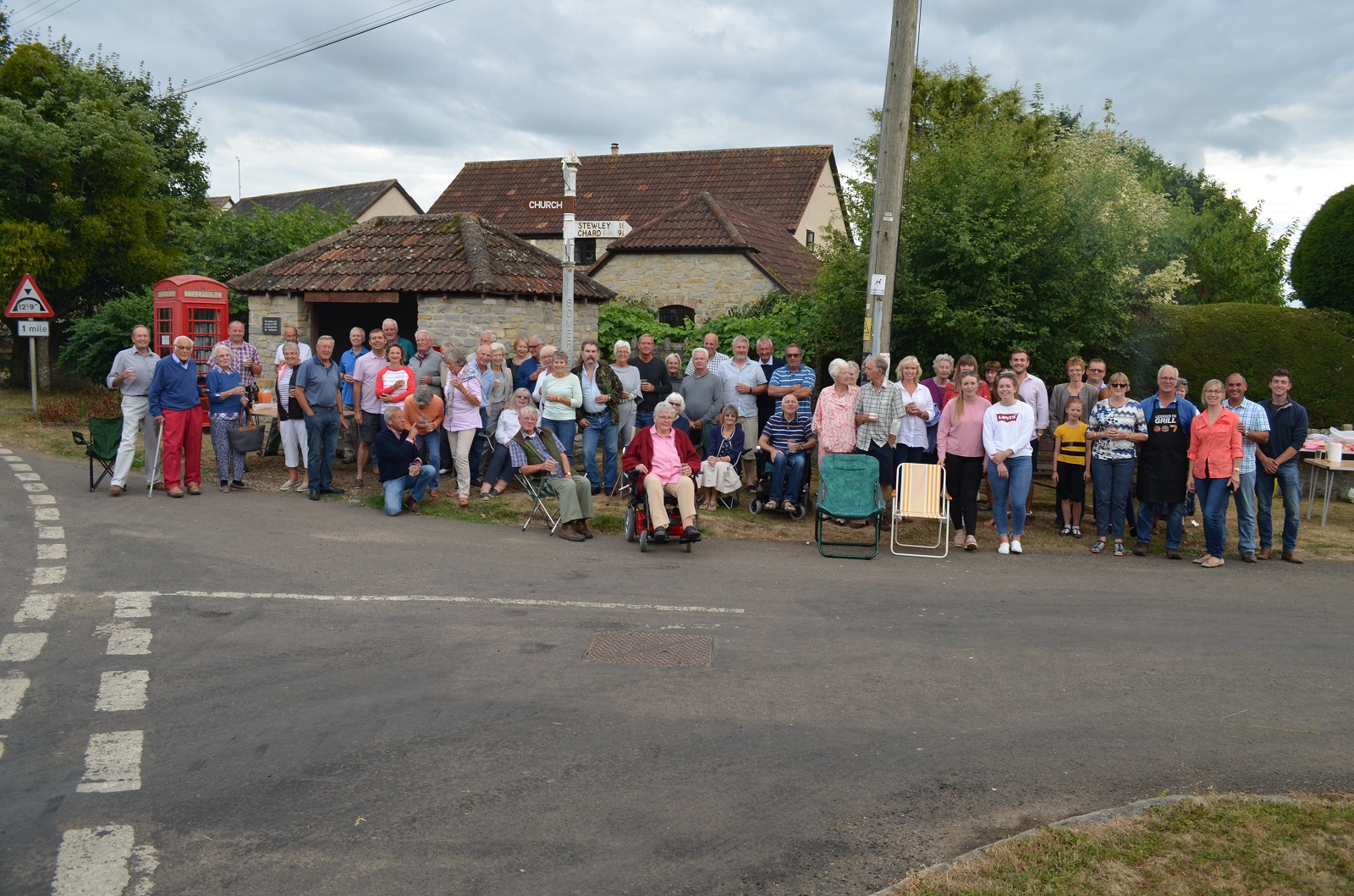
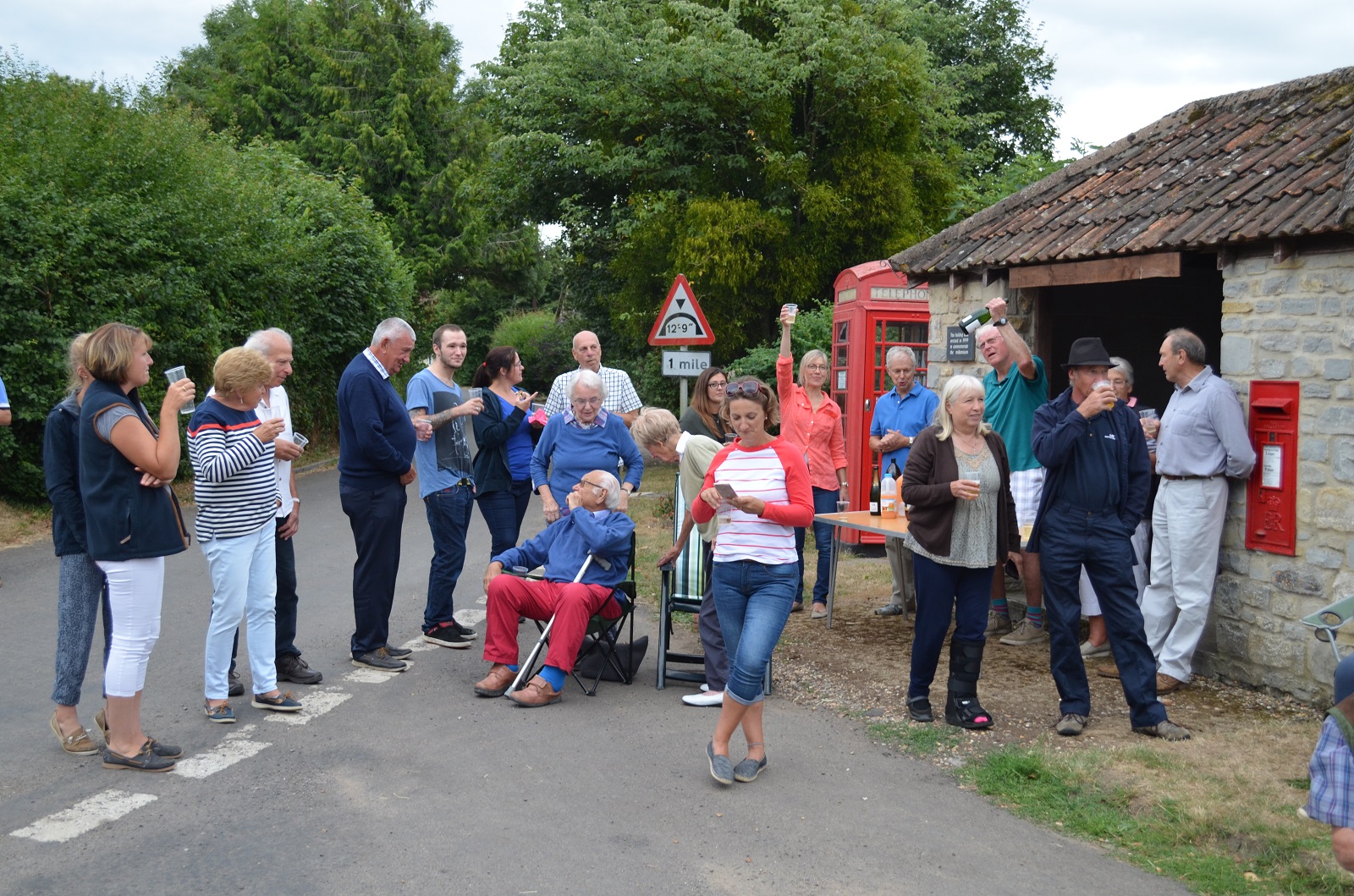
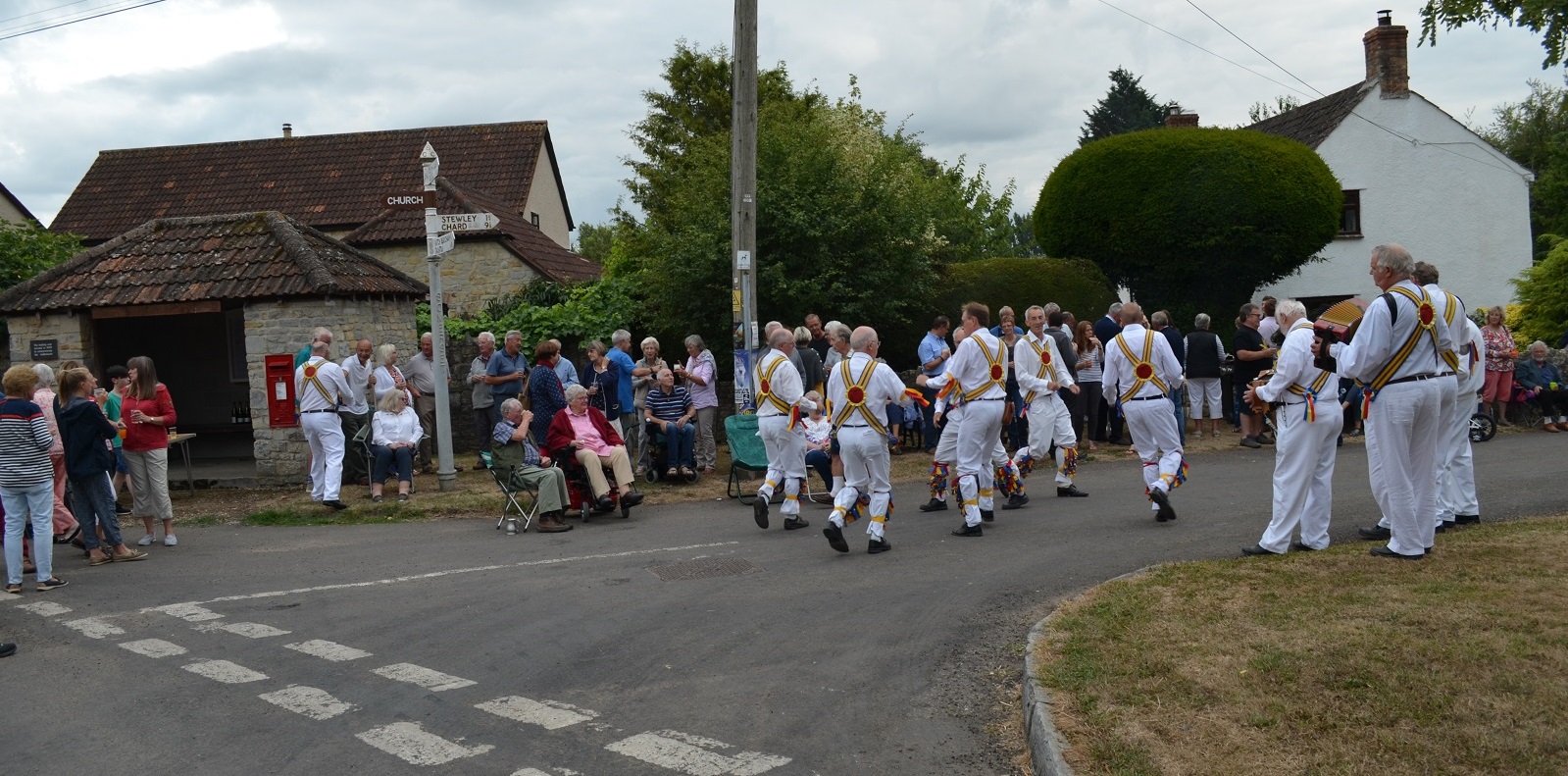
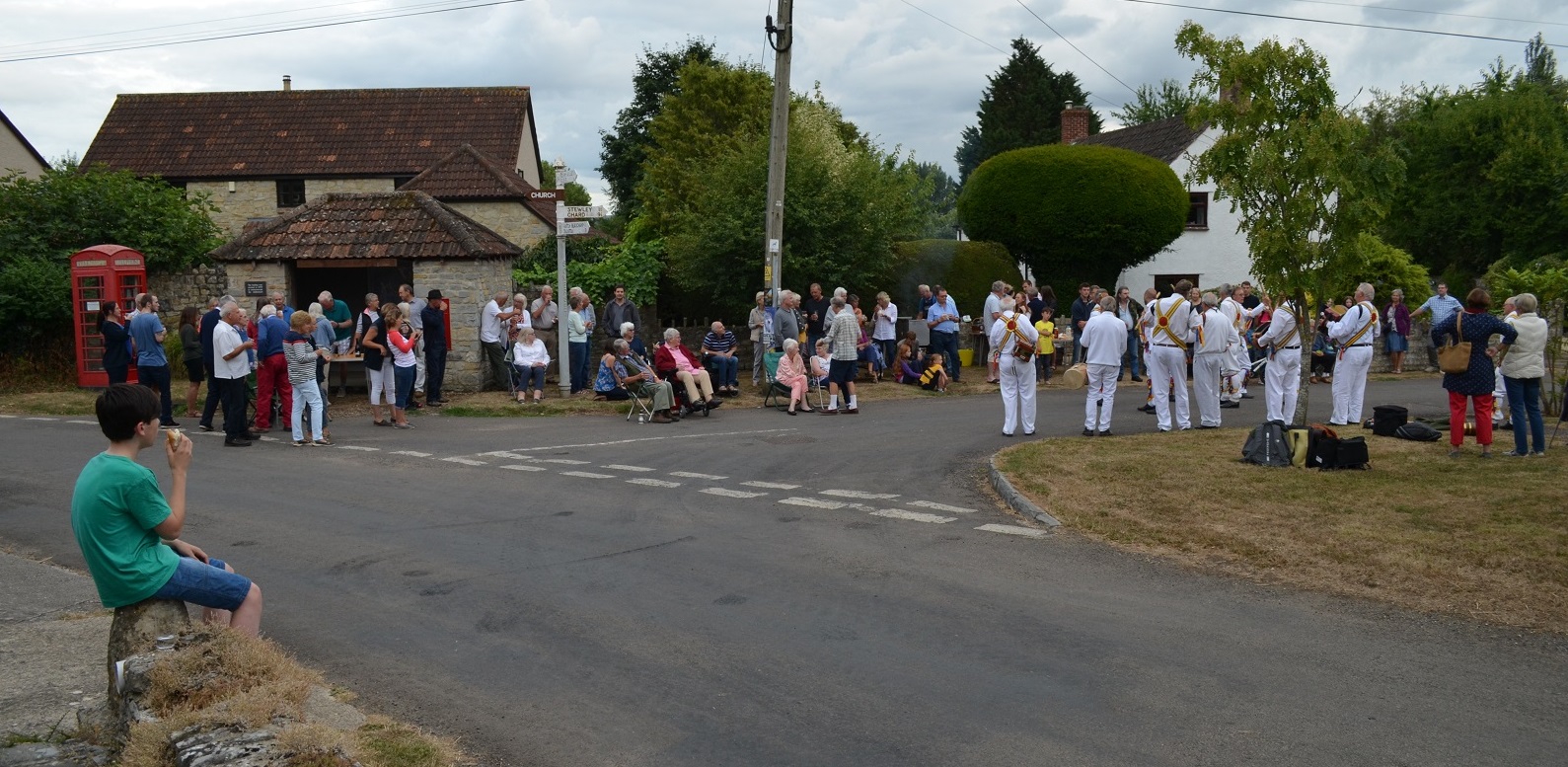
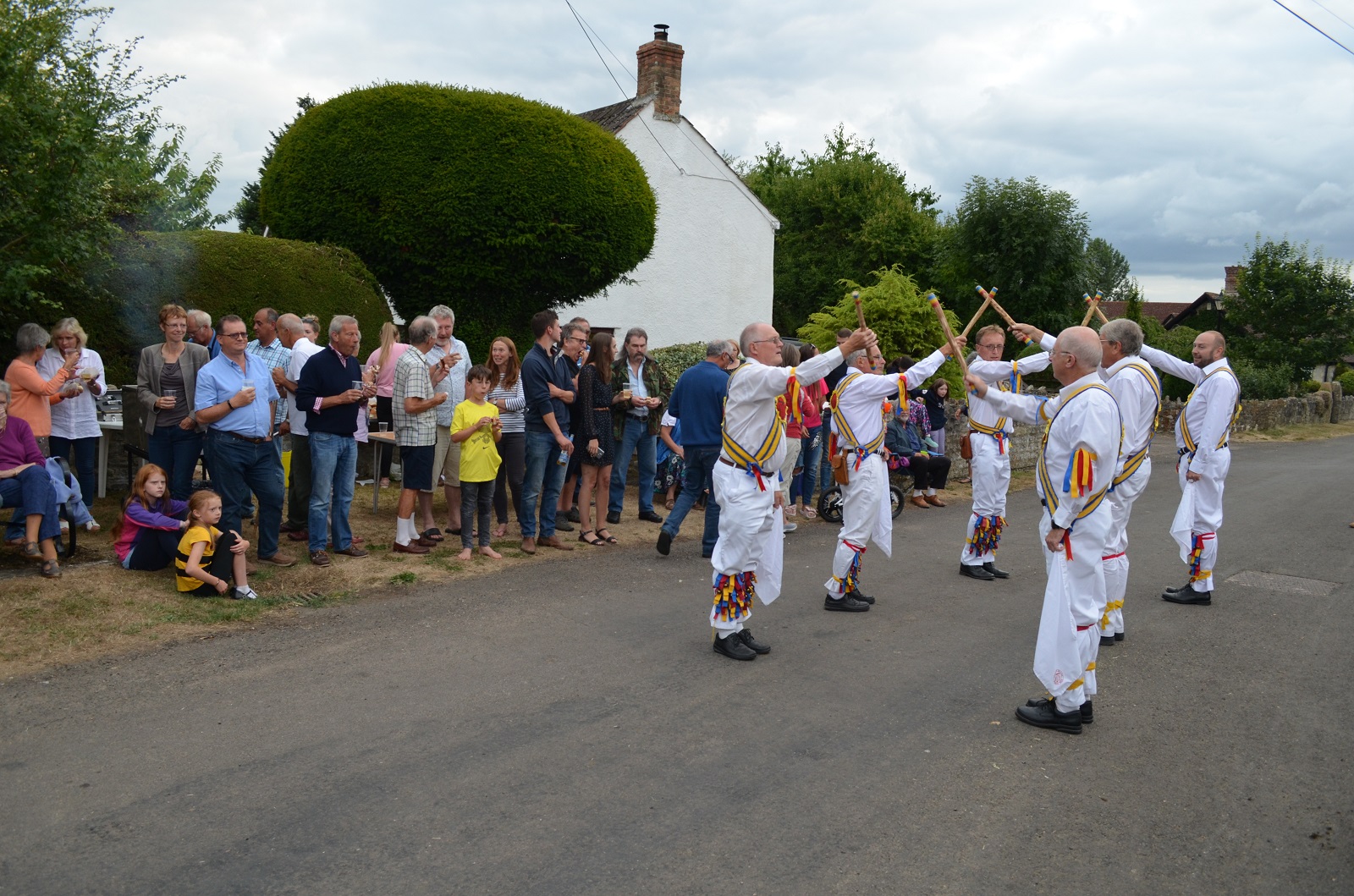
Beercrocombe receiving ownership of village green 17th July 2018
Gaining Ownership of our Village Green - why did it take 50 years?
Following the requirements of the 1965 Commons Registration Act the late Tony Davies registered the village green in 1969 on behalf of the parish. He received back the registration certificate and plan, but as the parish had no Council Beercrocombe was not registered as owner. Tony Davies must have had the aspiration that Beercrocombe would be the owner of the village green, so the outcome must have been a disappointment.
At a Commons Commissioner hearing in late 1977 the ownership of Beercrocombe’s village green was considered and he directed that ownership would go to Yeovil District Council, which later became South Somerset District Council (SSDC). No one from Beercrocombe or Yeovil District Council attended the hearing, presumably because no one saw the public notices. The years passed and when SSDC came to audit their estate to register it with the Land Registry, Beercrocombe’s village green was not included. More years passed. For reasons unknown the Parish Council never raised the ownership of the village green once it had formed in 1984. However, a chance discussion last year led to the decision to find out who owned the village green. Having lost all record of it, SSDC was adamant that they did not own it. An application by the Parish Council direct to the Land Registry was rejected as the historical documents indicated that SSDC was the legal owner. A second approach to SSDC was more successful as they agreed, without declaring ownership, to transfer ownership to Beercrocombe Parish Council. The bureaucracy was sweetened by SSDC only requiring £1 for the village green. Finally, the village green was successfully registered with the Land Registry in July 2018.
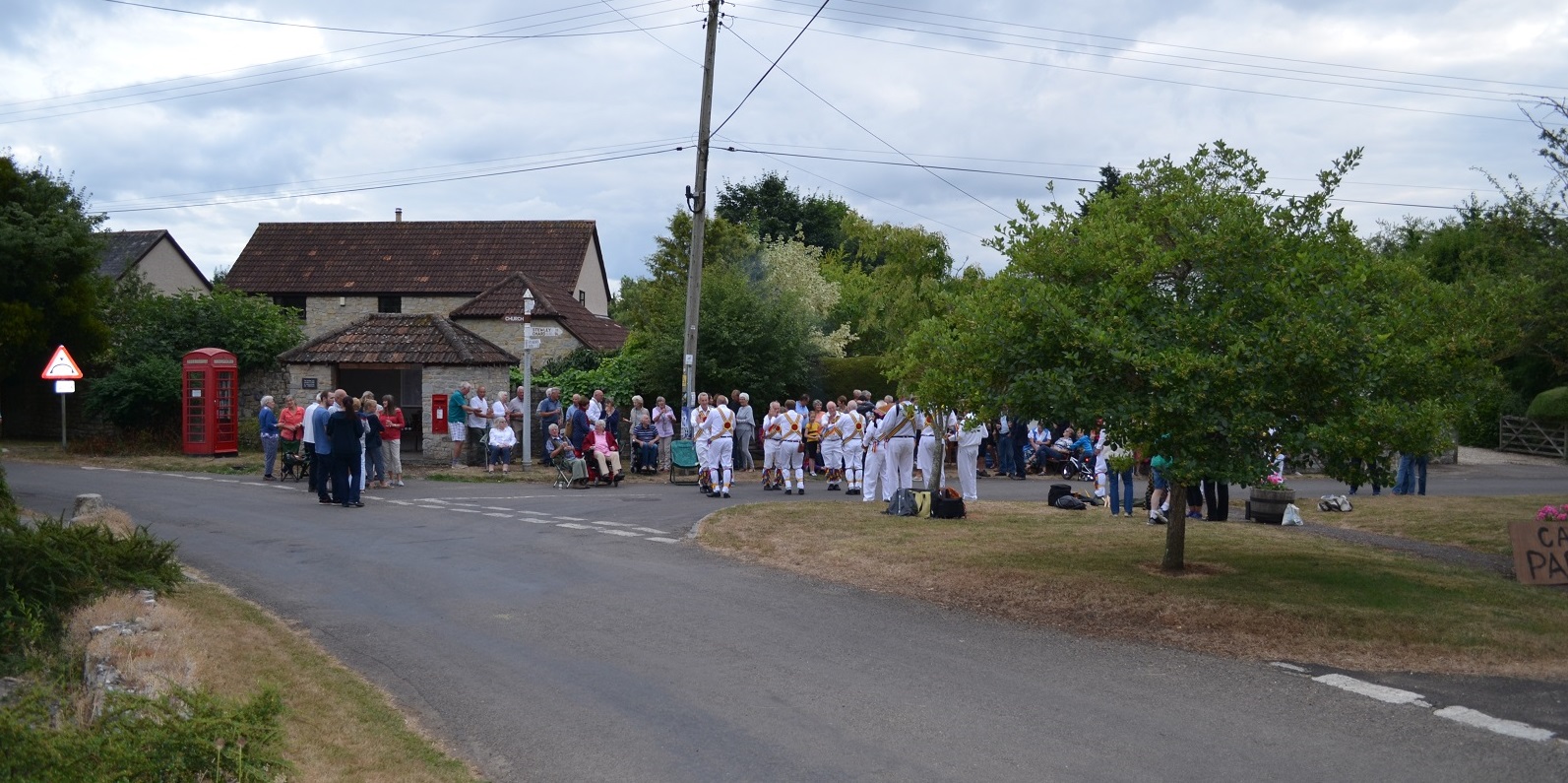
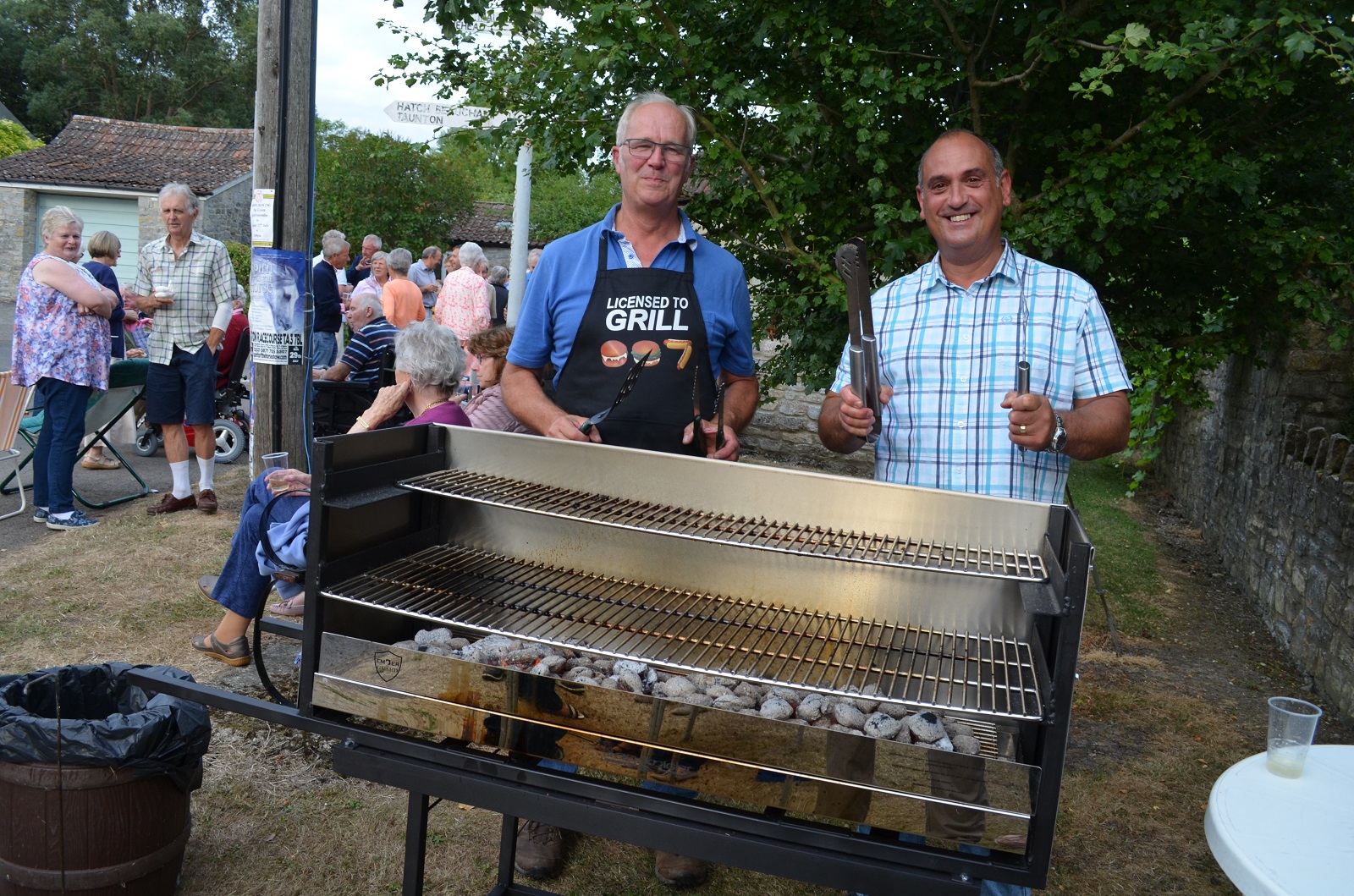
As the Taunton Deane Morris Men were scheduled to perform at the village green on Tuesday 17th July 2018, the parish used the occasion to celebrate gaining its ownership with a barbecue and bubbly. Besides enjoying a village social event there was a feeling of connecting the past to the present and general satisfaction that the aspiration of the late Tony Davies in 1969 was fulfilled some 50 years later.
Following the requirements of the 1965 Commons Registration Act the late Tony Davies registered the village green in 1969 on behalf of the parish. He received back the registration certificate and plan, but as the parish had no Council Beercrocombe was not registered as owner. Tony Davies must have had the aspiration that Beercrocombe would be the owner of the village green, so the outcome must have been a disappointment.
At a Commons Commissioner hearing in late 1977 the ownership of Beercrocombe’s village green was considered and he directed that ownership would go to Yeovil District Council, which later became South Somerset District Council (SSDC). No one from Beercrocombe or Yeovil District Council attended the hearing, presumably because no one saw the public notices. The years passed and when SSDC came to audit their estate to register it with the Land Registry, Beercrocombe’s village green was not included. More years passed. For reasons unknown the Parish Council never raised the ownership of the village green once it had formed in 1984. However, a chance discussion last year led to the decision to find out who owned the village green. Having lost all record of it, SSDC was adamant that they did not own it. An application by the Parish Council direct to the Land Registry was rejected as the historical documents indicated that SSDC was the legal owner. A second approach to SSDC was more successful as they agreed, without declaring ownership, to transfer ownership to Beercrocombe Parish Council. The bureaucracy was sweetened by SSDC only requiring £1 for the village green. Finally, the village green was successfully registered with the Land Registry in July 2018.
As the Taunton Deane Morris Men were scheduled to perform at the village green on Tuesday 17th July 2018, the parish used the occasion to celebrate gaining its ownership with a barbecue and bubbly. Besides enjoying a village social event there was a feeling of connecting the past to the present and general satisfaction that the aspiration of the late Tony Davies in 1969 was fulfilled some 50 years later.
Photographs by Willy Vigus, click on each to enlarge or click here for slide show
Photographs by Willy Vigus, click on each to enlarge
Village Book Box
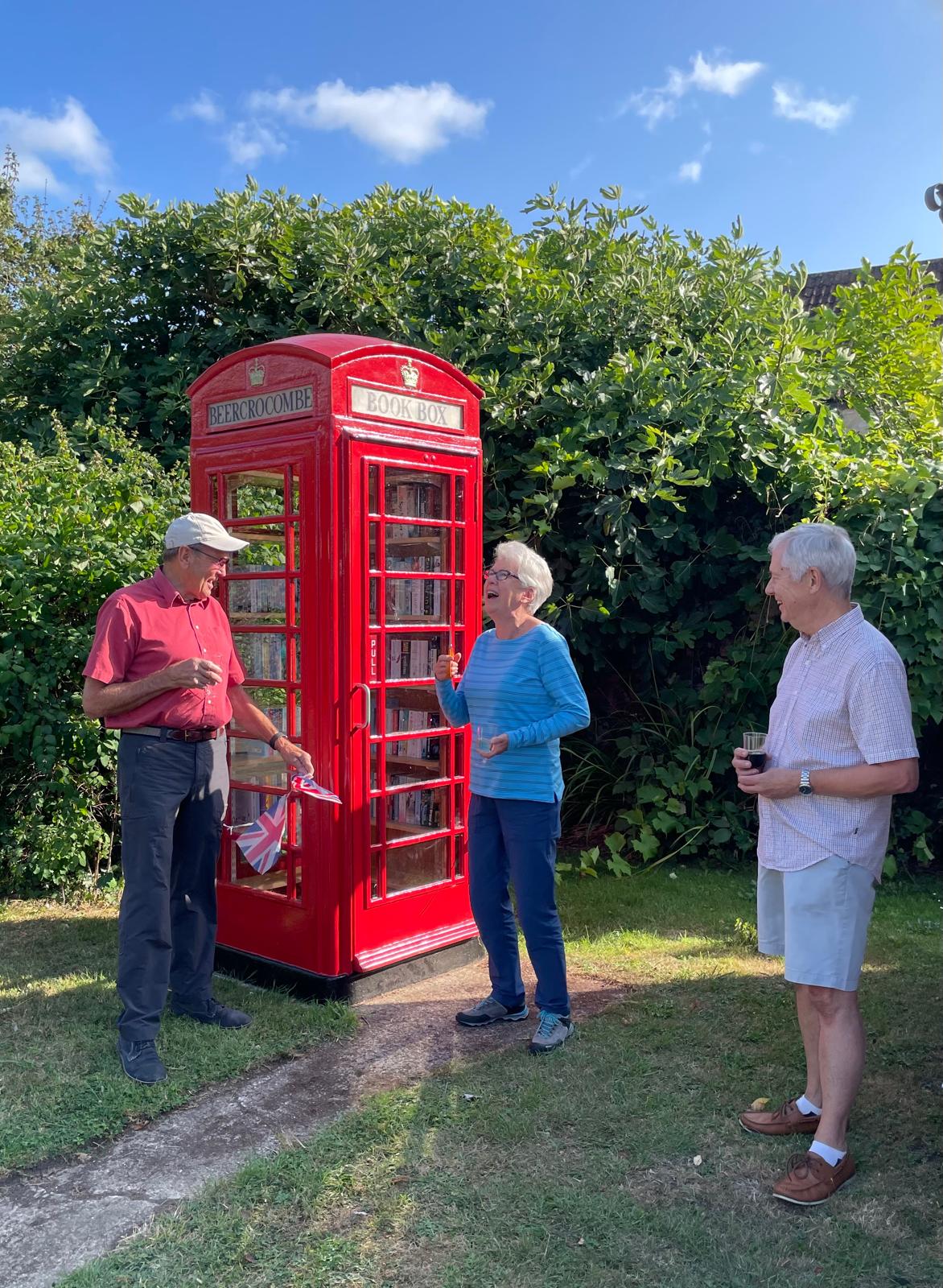
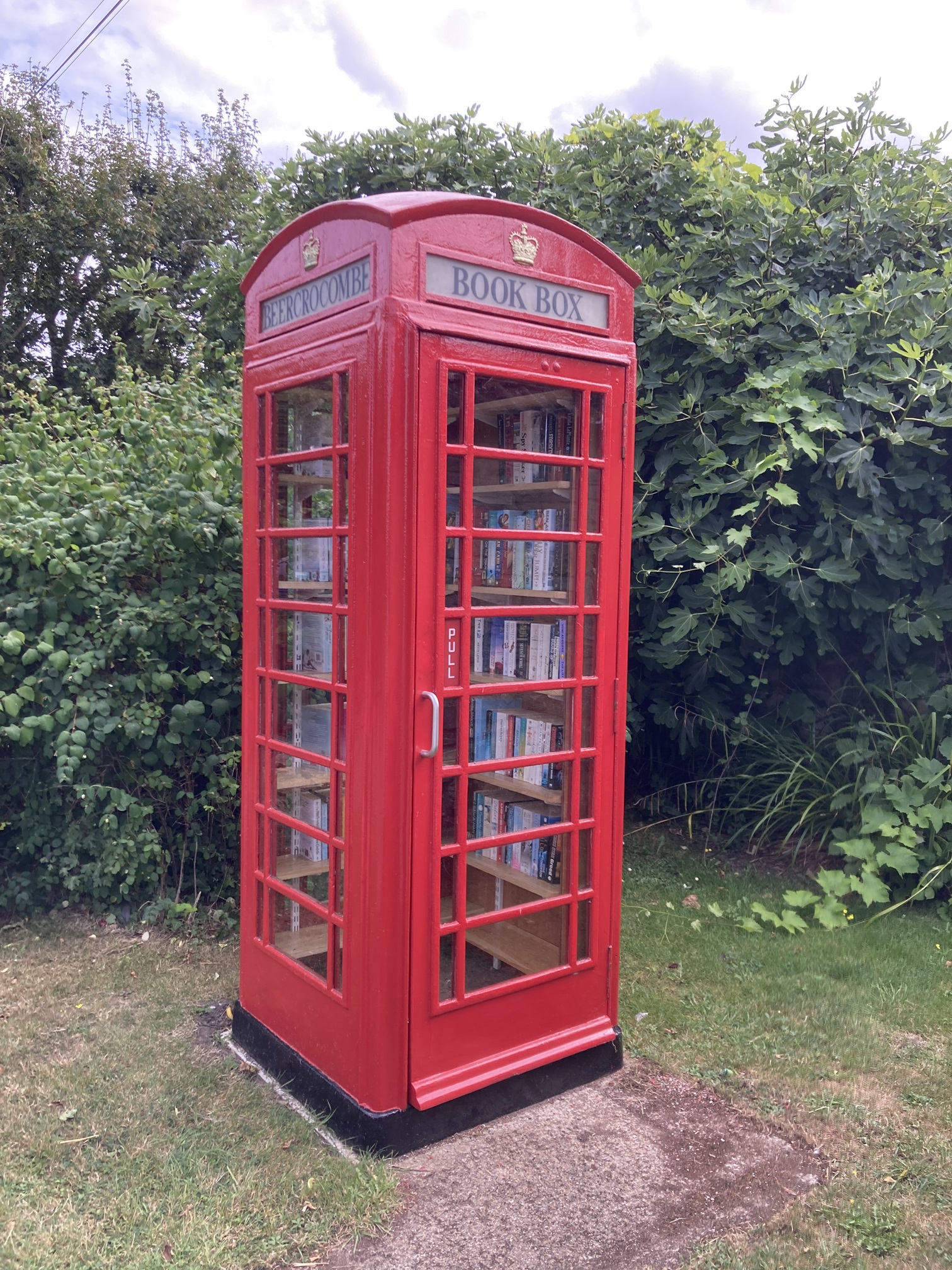
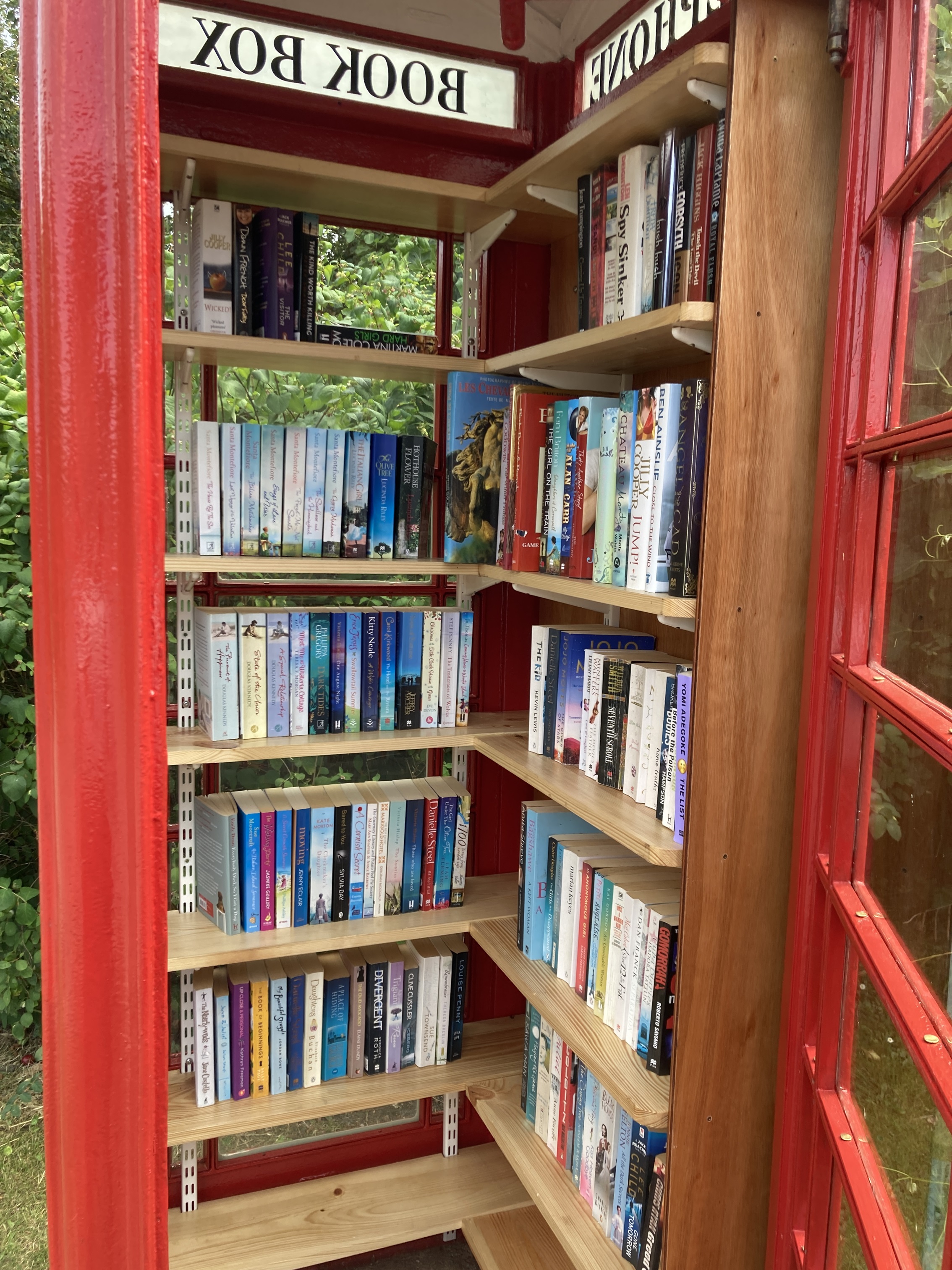
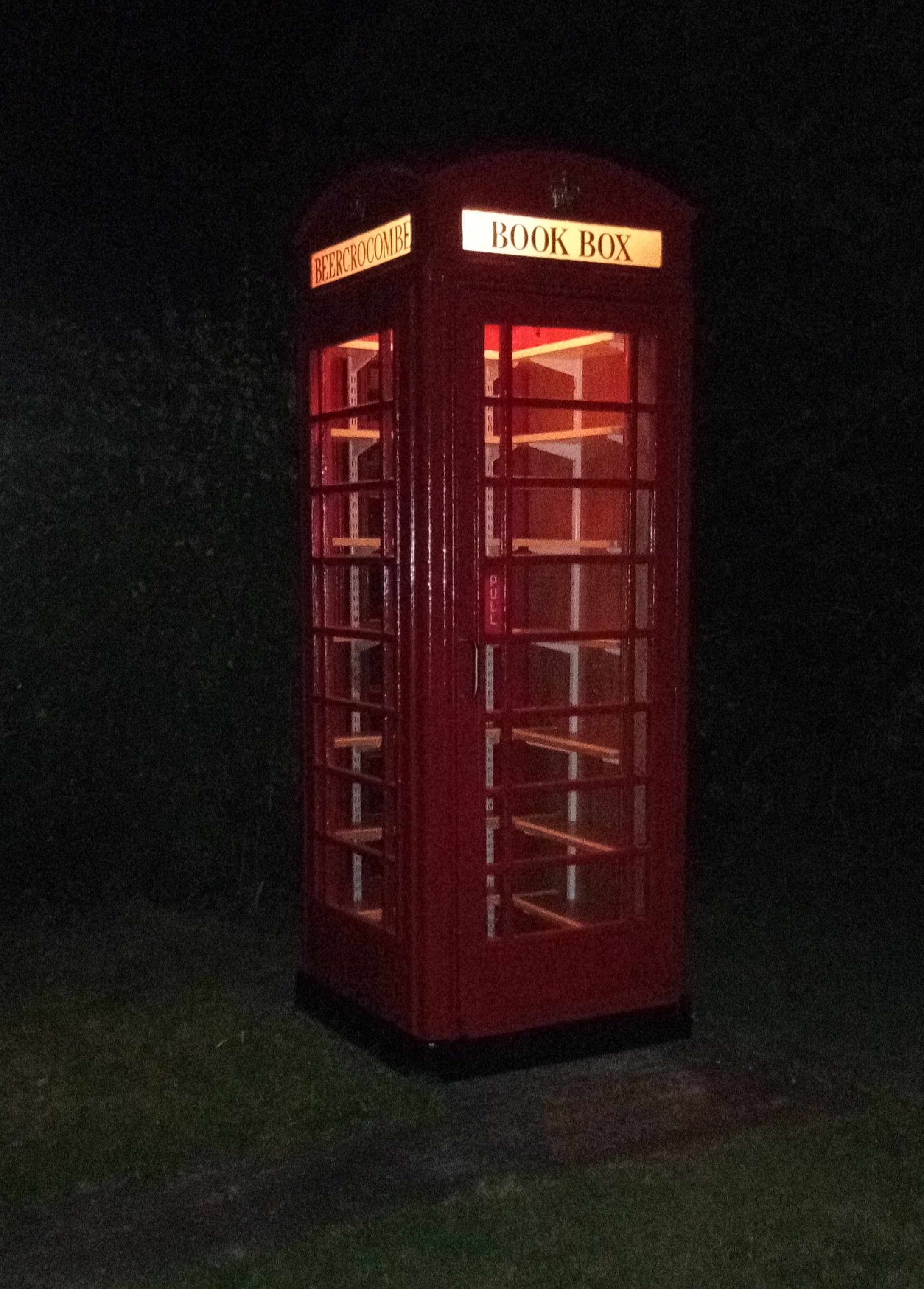
During the summer of 2024 parishioners undertook a major refurbishment of the BT K6 Kiosk bought by the Parish in 2009. Since then it has served as a book exchange and has become a much appreciated asset.
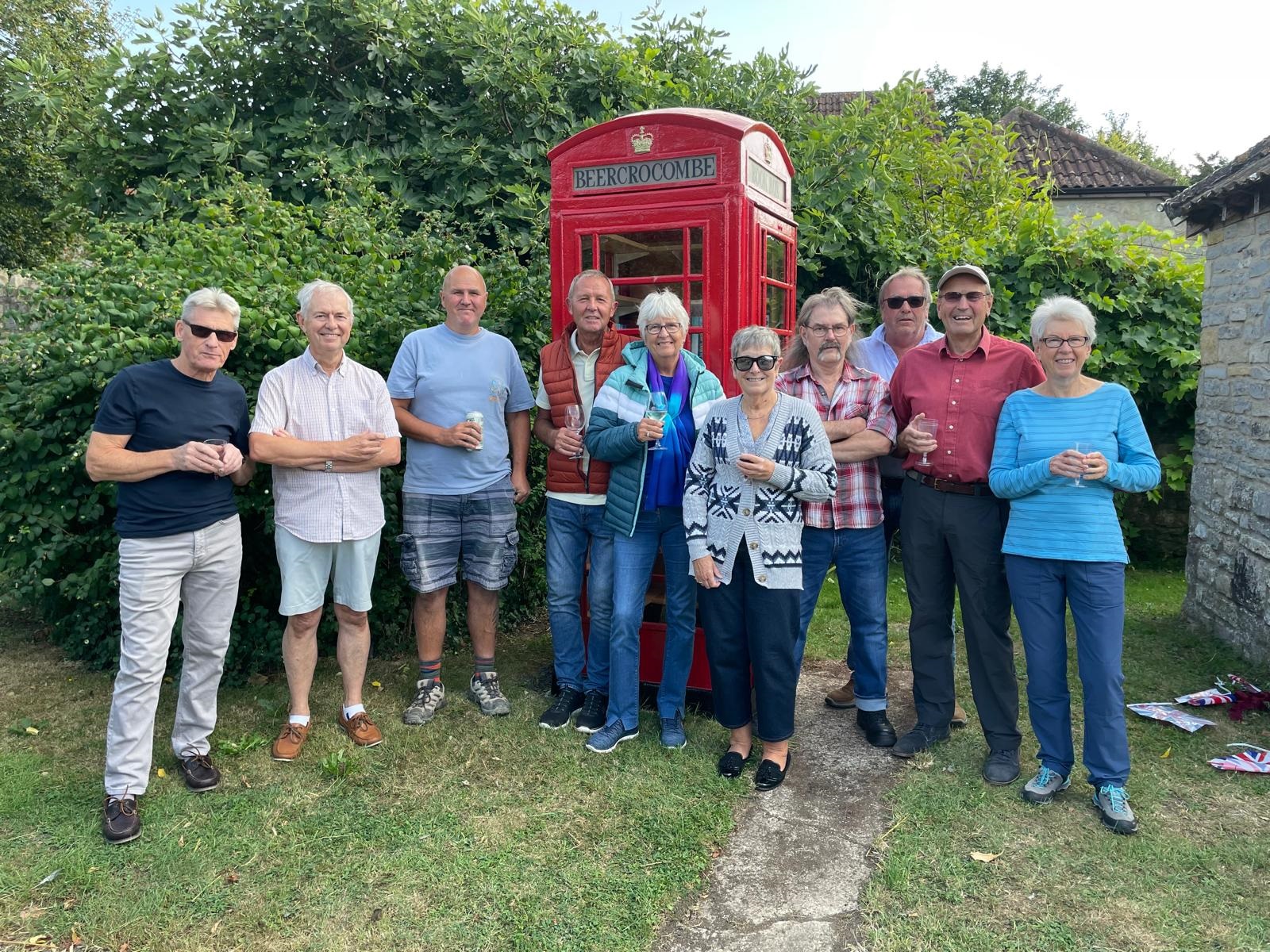
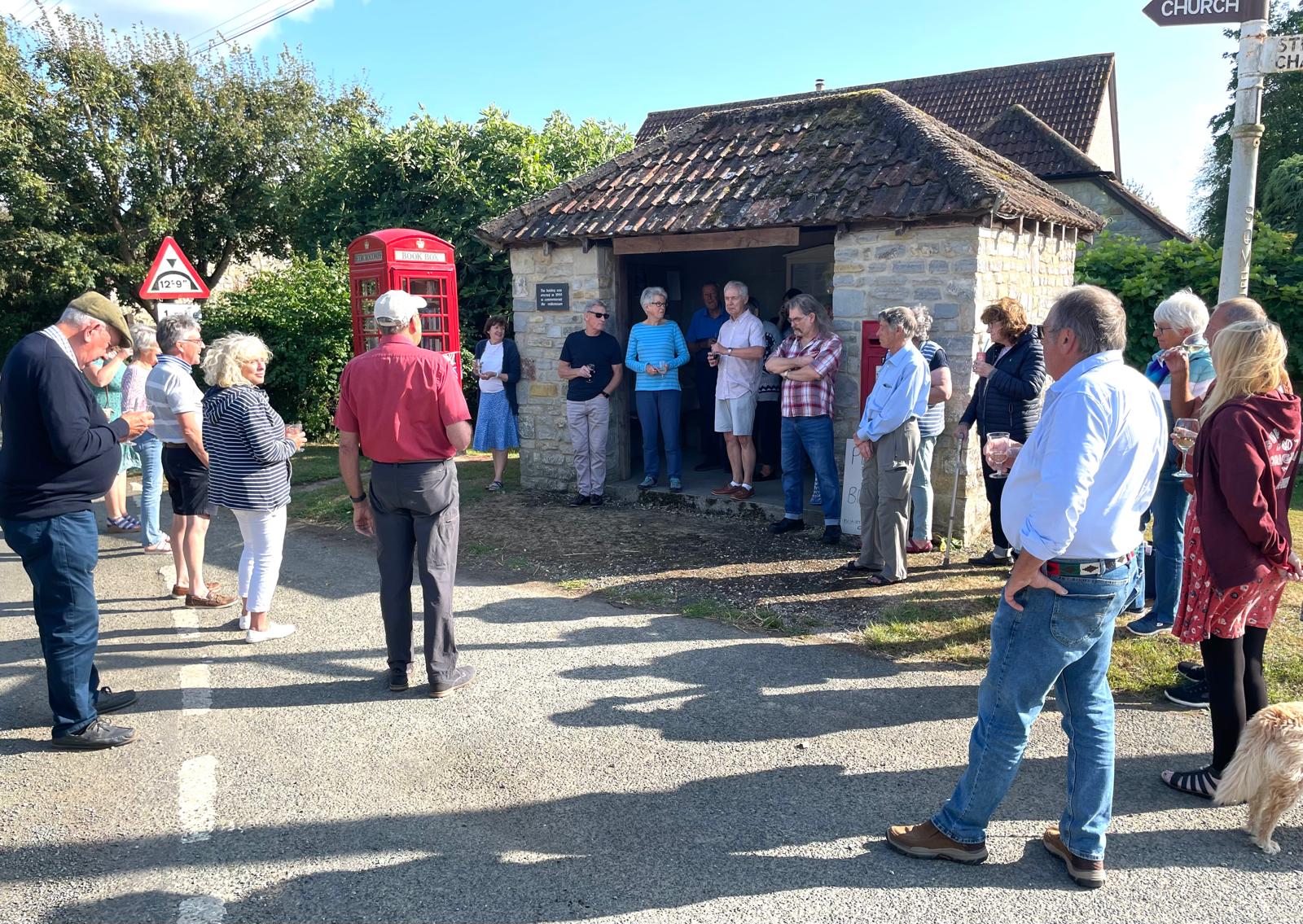
On 20 August 2024 villagers gathered to raise a glass to our new Book Box.
First photo is of the work party, joined by Chris Dale and Julia Wright (L and R).
Julia bought the Kiosk on behalf of the Parish from BT for £1 and both did an initial refurbishment themselves. The village is now thankful for their foresight.
During the summer of 2024 parishioners undertook a major refurbishment of the BT K6 Kiosk bought by the Parish in 2009. Since then it has served as a book exchange and has become a much appreciated asset.
On 20 August 2024 villagers gathered to raise a glass to our new Book Box.
First photo is of the work party, joined by Chris Dale and Julia Wright (L and R).
Julia bought the Kiosk on behalf of the Parish from BT for £1 and both did an initial refurbishment themselves. The village is now thankful for their foresight.
The origins of the village probably date back to late Saxon times when the original settlement is likely to have been a small scattering of farmsteads created by clearance at the edges of the Neroche Forest.
There are many theories as to the origin of the name but the current spelling is quite recent. In the Domesday Book it is recorded as Bere, which could be derived from the old English baeru - a wood or grove, or baer - a pasture. Beer Crocombe or Beer Crowcombe became the norm from about 1600 but Beere or Beer was still used up to the 1700s. The Crocombe part of the name could derive from associations with other Crocombes in Somerset. One recent suggestion is that it may be a corruption of Beer Crewkerne since it used to be in the Deanery of Crewkerne and the name would have differentiated the place from Beer near Taunton.
Bere prior to the Norman Conquest was one of the possessions of a Saxon landholder called Algar. It paid a Geld or land tax for 5 hides, when a hide was judged to be an area of land sufficient to support a household. Following the Conquest the village became part of the estates of Reginald de Vautorte but he in turn was a sub-tenant of Count Robert de Mortain, half brother of William the Conqueror, who ruled his lands from his castle at Montacute near Yeovil.
No buildings survive from those times and the church dating from the 13th century is the earliest structure. There is no evidence of a manor house in the village and such a building would have been unlikely since Beercrocombe was always part of a much larger land holding. Beercrocombe had several owners after Norman times eventually in the late 1500’s coming into the ownership of the Wadham family of Merryfield, who founded the college of that name in Oxford. Beercrocombe and the rest of the Wadham estates then came by marriage to the Wyndhams in 1572 and remained with that family until 1920 when the estate was parcelled up and auctioned.
St James Church mainly dates from the 15th century but there are 13th century remains of the earlier building. It is thought that John Harewell built the current church. He was given Beercrocombe in 1402 on his marriage to Margery, the daughter of the owner Sir Thomas Beaupyne. There are minor later additions and changes and the church may originally have been thatched. However the church as we see it today is much as was in the early 17th century. Whilst a simple country church St James has many interesting features, for example, the carvings at the base of the archways in the church, known locally as “Hunky-Punks”.
There are many theories as to the origin of the name but the current spelling is quite recent. In the Domesday Book it is recorded as Bere, which could be derived from the old English baeru - a wood or grove, or baer - a pasture. Beer Crocombe or Beer Crowcombe became the norm from about 1600 but Beere or Beer was still used up to the 1700s. The Crocombe part of the name could derive from associations with other Crocombes in Somerset. One recent suggestion is that it may be a corruption of Beer Crewkerne since it used to be in the Deanery of Crewkerne and the name would have differentiated the place from Beer near Taunton.
Bere prior to the Norman Conquest was one of the possessions of a Saxon landholder called Algar. It paid a Geld or land tax for 5 hides, when a hide was judged to be an area of land sufficient to support a household. Following the Conquest the village became part of the estates of Reginald de Vautorte but he in turn was a sub-tenant of Count Robert de Mortain, half brother of William the Conqueror, who ruled his lands from his castle at Montacute near Yeovil.
No buildings survive from those times and the church dating from the 13th century is the earliest structure. There is no evidence of a manor house in the village and such a building would have been unlikely since Beercrocombe was always part of a much larger land holding. Beercrocombe had several owners after Norman times eventually in the late 1500’s coming into the ownership of the Wadham family of Merryfield, who founded the college of that name in Oxford. Beercrocombe and the rest of the Wadham estates then came by marriage to the Wyndhams in 1572 and remained with that family until 1920 when the estate was parcelled up and auctioned.
St James Church mainly dates from the 15th century but there are 13th century remains of the earlier building. It is thought that John Harewell built the current church. He was given Beercrocombe in 1402 on his marriage to Margery, the daughter of the owner Sir Thomas Beaupyne. There are minor later additions and changes and the church may originally have been thatched. However the church as we see it today is much as was in the early 17th century. Whilst a simple country church St James has many interesting features, for example, the carvings at the base of the archways in the church, known locally as “Hunky-Punks”.
Origins of village and name